Choosing where to focus your effort matters when time and budgets are limited. In 2026, both search engines and Pinterest can bring steady traffic, but they work differently. Understanding how each channel fits your content, audience, and capacity helps you make practical choices. This article compares both approaches and offers steps to test them without overcommitting.
How SEO and Pinterest Actually Work
SEO (Search Engine Optimization) aims to match your content with what people search for on Google and other engines. It depends on relevance, content quality, site structure, and links. Good SEO helps pages show up for queries that match intent, from quick answers to in-depth research.
Pinterest is a visual discovery platform where people browse and save ideas. Unlike typical social platforms, content can keep circulating for months through repins and searches. The engine behind Pinterest is part search, part recommendation, and it leans heavily on strong visuals and clear pin metadata.
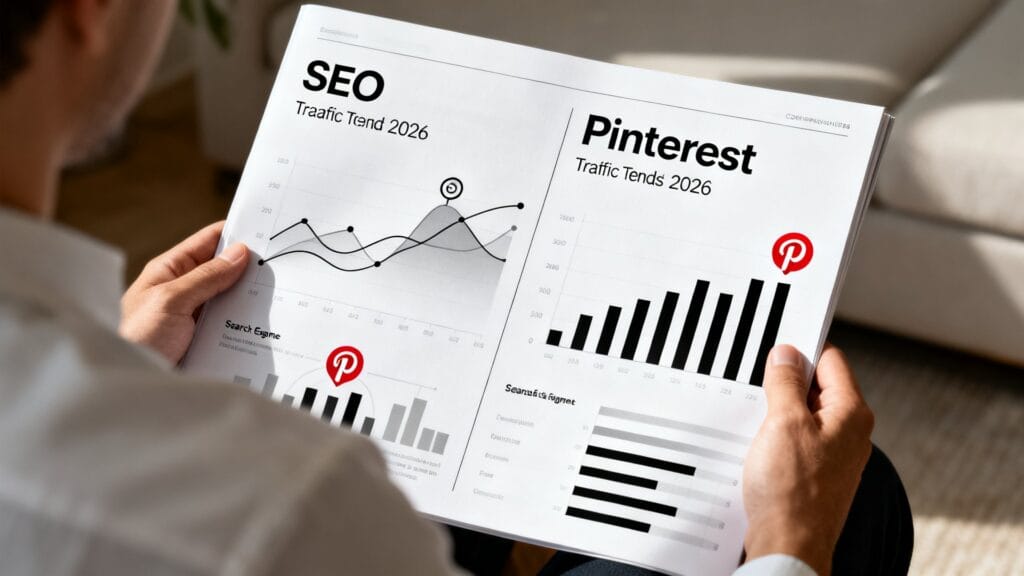
A simple takeaway: SEO targets typed queries; Pinterest targets visual discovery and planning. Your content type and audience behavior matter more than any single “best” channel.
Traffic Quality: What “Good” Traffic Looks Like
Traffic quality is not only pageviews. It includes engagement, time on page, email sign-ups, and qualified leads. With SEO, people often arrive with a specific question or need. They may be further along in research, which can lead to deeper reading or comparisons.
Pinterest users often come with a planning mindset. They save ideas and may return later. Some niches see shorter sessions but higher top-of-funnel sign-ups because users collect options before deciding.
Many bloggers notice that intent differences show up in analytics. SEO might bring fewer clicks at first but steadier reading time. Pinterest might spike around seasonal content and ideas people like to save. The takeaway: define “good” traffic for your goal, then compare channels by that measure, not just raw visits.
Best-Fit Niches and Content Types
SEO can work across most topics that people actively search for. It shines with evergreen how-tos, in-depth guides, and comparisons. It also supports local content and product-led pages when aligned with search intent.
Pinterest tends to favor visually-led niches. These often include:
- Food and recipes
- Home decor and DIY
- Beauty, fashion, and style guides
- Travel inspiration and itineraries
- Weddings, events, and seasonal planning
- Printable checklists and planners
I’ve seen that posts with step-by-step visuals or clear before/after stories get stronger traction on Pinterest. On the other hand, detailed comparisons or technical guides often do better in search. The takeaway: match your content format to each channel’s strengths before deciding where to invest.
Workflow and Maintenance: What It Takes Day to Day
SEO demands consistent on-site improvements and content updates. You’ll research keywords, map intent, structure pages, and improve internal links. Over time, you’ll refresh content, fix technical issues, and build helpful links. Many site owners handle this in weekly blocks rather than daily sprints.
Pinterest benefits from regular pin creation and testing. That includes fresh images, varied titles, descriptive text, and seasonal timing. Scheduling tools help, but you still need to review boards, analyze pin performance, and keep branding consistent.
Both channels reward gradual improvement. If you prefer building durable assets and optimizing steadily, SEO may fit your style. If you enjoy design, quick experiments, and visual storytelling, Pinterest can feel more natural. The takeaway: choose the workflow you can sustain.
Algorithm Changes in 2026: What’s Different Now
Search engines continue to prioritize helpful content, user experience, and authority signals, although the exact weighting of these factors evolves over time. Search results increasingly include AI-generated summaries, which may reduce click-through rates for certain informational queries, depending on the topic and user intent.. Content that offers unique insights, original data, or clear depth tends to hold better.
Pinterest appears to prioritize fresh visuals, keyword-relevant titles, and engagement signals such as saves, although the exact algorithmic factors are not publicly disclosed. Static images still matter, but short-format video and idea pins can improve reach in many categories. Seasonal cycles remain significant, so planning ahead helps.
Neither channel is set-and-forget. Avoid quick wins that rely on loopholes. The takeaway: build content that offers real utility and update it regularly to hold visibility through changes.
Measurement: How to Compare Channels Fairly
Raw clicks alone can be misleading. Set up basic tracking to evaluate both channels on comparable metrics:
- Engagement: average time on page, pages per session
- Conversion proxies: email sign-ups, downloads, add-to-cart
- Assisted impact: saves on Pinterest, return visits from SEO
- Seasonality: weekly or monthly rolling averages rather than single spikes
Give each channel a fair testing window, such as 8–12 weeks. Use simple dashboards to track a few core metrics, not dozens. Another light observation: many bloggers notice that Pinterest looks strong quickly, while SEO shows clearer trend lines later.
The takeaway: decide your primary goal, choose 3–4 metrics, and review them on a schedule. Consistency beats reactive tweaks.
Content Strategy: Building for Each Channel
For SEO, outline topics around user intent. Group related posts and link them together. Use clear headings, concise answers, and examples where helpful. Update posts that start to rank and add clarifying sections when you see what searchers need.
For Pinterest, design multiple images for one post, each testing different visuals and titles. Use descriptive text that includes keywords naturally. Create boards that map to your content pillars, and keep them tidy. Consider seasonal schedules, like planning holiday content well before the actual month.
To bridge both channels, write one strong article and build several Pinterest assets from it. Over time, audit which pins and queries perform best, then refine the article and imagery accordingly. The takeaway: one piece of content can serve both channels if you plan the assets at creation.
Time and Budget: Where Limited Resources Go Further
If you have more time than budget, leaning into SEO can combine well. You can learn the basics, draft content yourself, and improve structure incrementally. Tools help, but you can start lean with thoughtful outlines and on-page improvements.
If you have design skills or access to templates, Pinterest can pay off earlier in visual niches. Image creation, simple video snippets, and scheduling are often manageable. You can syndicate older content with fresh pins to extend its reach.
When both time and budget are tight, choose one main channel and one secondary. For example:
- Main: SEO with two optimized posts per month
- Secondary: Pinterest with three fresh pins per post
Or reverse that if your content is highly visual. The takeaway: focus on one primary engine and keep a light presence on the other.
Common Pitfalls and Practical Fixes
For SEO, a common mistake is targeting broad, competitive topics without a plan. Start with lower-difficulty queries and build topical depth. Thin content also holds you back. Add examples, steps, or small data points to make posts more helpful.
For Pinterest, many users pin infrequently or rely on one image per post. Create multiple formats and test titles. Linking to weak landing pages also hurts performance. Ensure your post delivers on the promise of the pin and loads quickly on mobile.
The takeaway: small, repeated improvements often beat big overhauls. Keep a simple checklist and iterate monthly.
Realistic Testing Plans for 90 Days
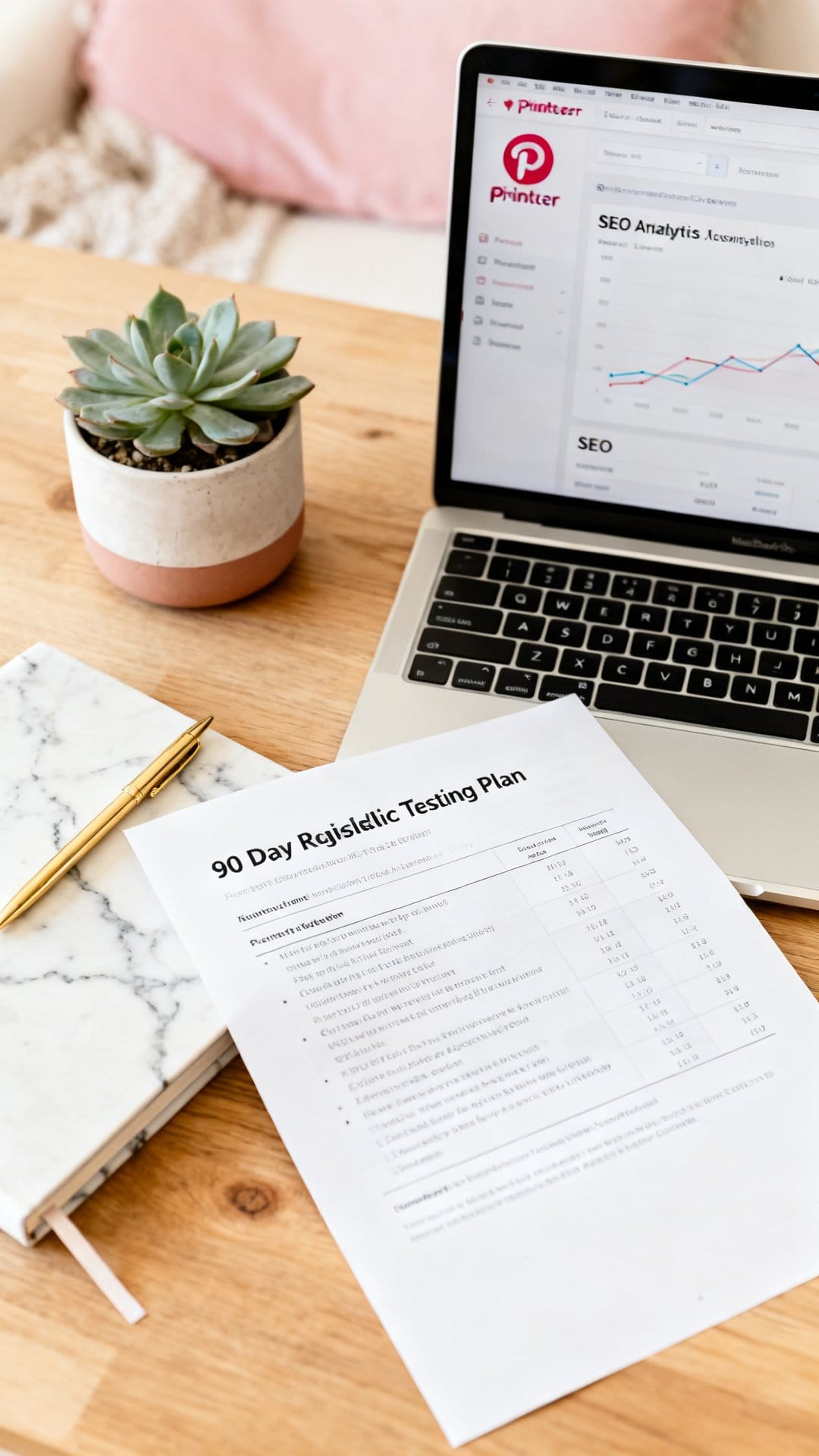
Here is a straightforward plan to compare both channels without stretching yourself:
- Weeks 1–2: Identify 6–8 target topics (mix of evergreen and seasonal). Draft outlines for 3 posts. Create 2–3 pin concepts per post.
- Weeks 3–6: Publish 3 posts with basic on-page SEO. Create 3–5 pins per post, schedule over 2–3 weeks. Track clicks, saves, and time on page.
- Weeks 7–10: Update the best-performing post. Add one related post to deepen that topic cluster. Create 3 more pins for the top post with new angles.
- Weeks 11–12: Review metrics for both channels against your primary goal. Decide which channel becomes the main focus for the next quarter.
The takeaway: a short, structured test reveals fit without committing to a full-year plan.
Which Brings More Traffic in 2026? A Balanced View
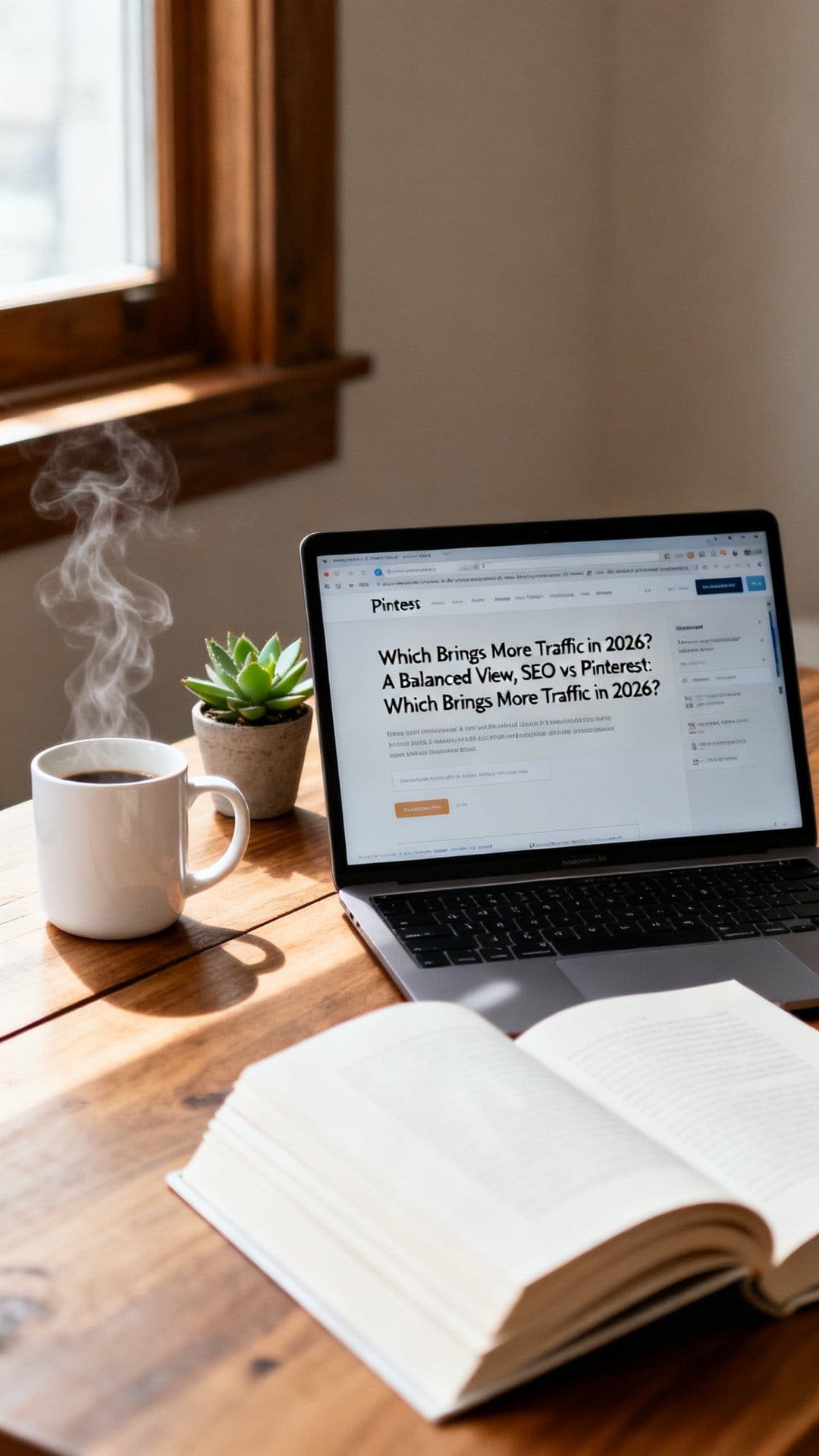
In many niches, SEO can serve as a long-term traffic foundation, particularly for information-dense topics, although results depend heavily on competition and domain authority. Pinterest can be great for visual, seasonal, and planning content. Each has different ramp-up patterns, and each can complement the other.
If your content is highly visual and aligns with planning-oriented searches, Pinterest may generate initial traffic more quickly in some cases.If your content solves specific questions or compares options, SEO may build steadier results over time. The decision often comes down to your content format, timeline, and comfort with the workflow.
The takeaway: the “best” channel is the one that fits your niche, resources, and goals—and the one you can stick with.
Practical Next Steps

Pick one primary channel for the next quarter. Set a realistic publishing cadence. Build assets for the secondary channel with minimal extra work, such as repurposing images or refining titles.
Review metrics monthly and keep notes on what seems to resonate. Over a few cycles, patterns emerge. Many bloggers notice that a consistent, modest process beats sporadic bursts of effort.
The takeaway: clarity and steady action matter more than chasing every new tactic.
Conclusion
Both SEO and Pinterest can bring meaningful traffic in 2026, but the right choice depends on your niche and habits. Start with a simple plan, measure what matters to you, and iterate calmly. Consistent effort tends to produce the most reliable progress over time.
Frequently Asked Questions
It depends on your niche, content format, and audience behavior. SEO often wins for research-driven topics and evergreen guides, while Pinterest can outperform for visual, idea-driven content like DIY, recipes, decor, fashion, and planning.
SEO matches pages to search queries based on relevance, quality, structure, and links, capturing intent from quick answers to deep research. Pinterest acts like visual search plus recommendations, where strong visuals and saves can combine distribution over months.
SEO favors complete, intent-aligned articles, structured guides, and problem-solving posts. Pinterest favors vertical visuals and idea-forward content—step-by-steps, checklists, seasonal inspiration, and product roundups with strong imagery.
Create one SEO cluster (3–5 related articles targeting clear queries) and one Pinterest set (5–10 pins per article, variations in titles and images). Track clicks, saves, and rankings for 6–8 weeks, then double down on the channel that shows lower cost per click and steadier growth.
SEO requires keyword research, on-page optimization, internal linking, and consistent publishing; links help but quality and structure come first. Pinterest requires strong visuals, consistent pinning, keyworded titles/descriptions, and testing multiple creatives for the same URL.