
Many people chasing flexibility assume earning from home means scraping by with online surveys or vague “side hustles.” Reality check: those routes rarely replace income. Yet thousands across Britain quietly build reliable home-based revenues from writing, consulting, eCommerce, or content creation. This How to Make Money From Home in the UK: Complete Guide breaks apart the popular myths, what actually works, and how small practical systems — not luck — make the difference. It aims to show how a structured approach and realistic expectations lead to sustainable income, not just quick wins. Whether you’re a stay-at-home parent, a professional seeking flexible hours, or someone wanting to add another income stream, there are mature, tested ways to earn substantially from the comfort of your own flat or kitchen table.
The Misconception That Kills Momentum Early
Most newcomers think making money from home equals instant passive income. They picture cash rolling in while the kettle boils and email notifications chiming with PayPal credits. The truth is, very few models are passive at the start. Affiliate bloggers, Etsy sellers, virtual assistants, and tutors all put in upfront hours for very modest returns. That early stage weeds out the impatient. It’s not uncommon for people to announce bold plans to replace their salary in three months, only to give up after six weeks of slow traction.

We’ve observed this across 50+ blog-build projects: those expecting fast profit give up before month three. Those treating their home business like an apprenticeship — deliberate skill growth, consistent publishing, and slow building up — end up earning thousands later. Take the example of Hannah, a Leeds-based copywriter who started with just one client at £50 per article. She structured a daily writing habit, learned SEO formatting, and gradually built her own website. Two years later, she now earns £3,000+ per month writing from home, but only because she viewed the first six months as training, not a failure.
Another misconception? That working from home is chaotic. In reality, structure creates freedom. The highest earners schedule specific “income hours.” They treat themselves as both employer and employee. Choosing not to do so traps them in endless multitasking — Pinterest one minute, invoices the next — with nothing truly finished. Experts in productivity like Cal Newport call this method “time-blocking”: allocating fixed hours for focused tasks. Home earners who live by calendars and routines often outperform those who rely on “feeling motivated,” because professionalism eventually replaces adrenaline as the main driver of income consistency.
It’s also important to avoid viewing home-based work as “less real” than office work. When you undervalue your environment, you start accepting lower rates, delaying invoices, or saying yes to projects that don’t align with your skill. Confidence in your work often mirrors income growth — and confidence builds through structure, feedback loops, and accountability, not magical luck.
The Right Approach: Systems Trump Hustle
Forget vague lists of “50 side hustles.” They dilute focus. The right approach is to build a repeatable system around one or two capabilities. Freelancing, eCommerce, and blogging each succeed through process, not novelty. Systems protect you from burnout because every action — from finding clients to posting content — becomes a checklist rather than an emotional rollercoaster.

I found this the hard way. My first blog earned nothing for a year because every post chased a new idea. I was “busy” but not progressing. Once I built a pipeline — 20 focused articles all on one niche — things changed overnight. Traffic grew steady, affiliate income became predictable. The workload stayed similar, but direction sharpened. That’s the secret few mention: clarity beats creativity at home. If you look at successful UK content creators like Louise Henry (who teaches productivity systems for online business owners), you’ll find they all use frameworks for consistency — batch work, templates, checklists, even simple Trello boards to reduce mental load.
In practice: if you’re freelancing, build outreach templates and client retention habits. Have a Monday routine for pitching and Fridays for invoicing. If you sell products, standardize listings, packaging, and customer updates. If you’re blogging, use SEO-focused outlines and automatic publishing prep tools. This shift from “do more” to “do predictably” raises income faster than any hack. Even a simple system like “research on Mondays, create on Tuesdays” adds up efficiency over time. It’s this predictability that helps self-employed people enjoy both freedom and growth — two things that often seem incompatible at first.
Why Mindset and Measurement Matter
Systems alone won’t save a chaotic mindset. To earn consistently, treat home income goals like a business project rather than a vague dream. Record weekly metrics: time spent, articles produced, proposals sent, revenue earned. Many freelancers resist numbers, but data clarifies decisions. For instance, if you spend 10 hours a week pitching clients and earn £400, you know your hour is worth £40. You can then focus on scaling high-yield activities. Similarly, bloggers track organic impressions, click-through rates, and affiliate conversion percentages. Quantitative tracking builds the emotional patience needed for long-term success — what management expert Peter Drucker once summarized: “What gets measured gets managed.”
How to Build a Reliable Home Earning Workflow
Now let’s get specific. Whether you’re running a blog or freelancing for UK clients, consistent output wins. One method I recommend is establishing a 20-content foundation. For bloggers, that means 20 posts that target low-competition UK search terms — long-tail phrases like “best budget accountant for freelancers UK” or “easy recipes for busy teachers.” These posts work as content assets that continue to attract traffic and affiliate clicks long after you write them, unlike social media posts that fade within 24 hours.
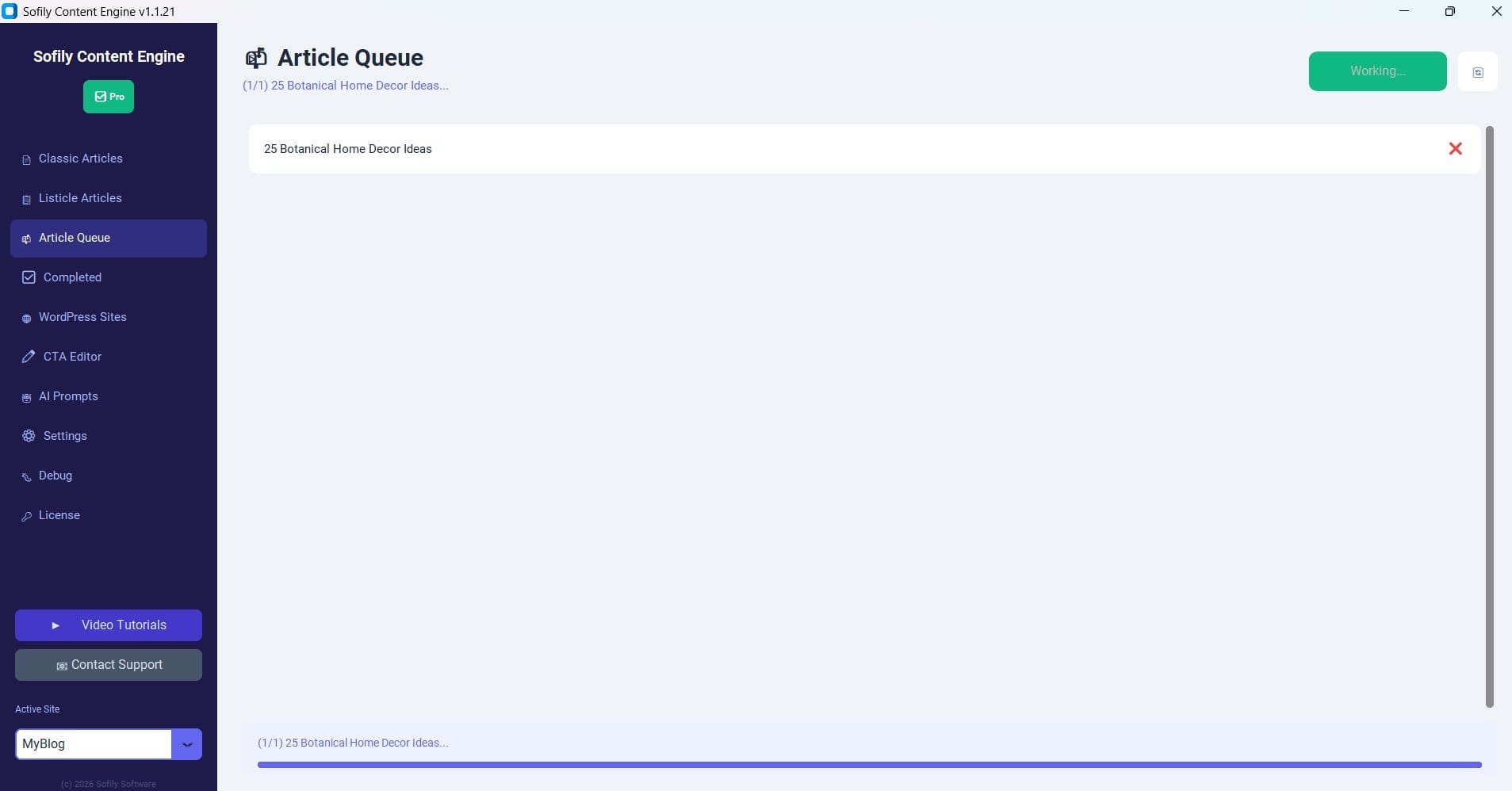
This sounds simple, but most fail on consistency. Here’s exactly how to fix that:
- Batch research one day, write titles the next, draft two posts per day, then review all together on day five.
- Use tools that support batching — for bloggers, even something like the Sofily Content Engine (SCE) helps create initial drafts across multiple WordPress sites in one go. It doesn’t publish automatically, so you stay the editor but save hours of manual setup.
- Create a visual tracker (Google Sheet or Notion board) listing every workpiece by stage — draft, edit, upload, review, publish. Visual clarity increases completion rates.
- In freelance work, apply the same logic: batch client outreach, schedule proposal writing, and reserve “deep work” slots for deliverables.
I’ve watched people triple their publishing cadence just by removing friction in workflow. Automation handles structure, humans sharpen quality. In a freelance workflow, you can build templates for proposals and invoices — these 10-minute setups save dozens of hours later. For creators selling courses or crafts, documenting your process once reduces repeat decisions. That’s your quiet superpower from home.
Also, choose tools intentionally. Invoicing software like QuickBooks Self-Employed or FreeAgent fits UK tax requirements. For task management, Asana and ClickUp offer free plans ideal for solopreneurs. A minimalist stack is better — two or three reliable tools you use deeply beats ten that overwhelm you. Remember, smooth workflow equals clearer cognition, and that’s where creativity thrives.
Building Accountability While Working Alone
Working solo at home can feel isolating. To counter this, build accountability into your routine. Join UK-based freelancer Facebook groups or co-working Slack communities. Some professionals participate in “Focus Fridays” — virtual sessions where each person shares goals for two hours, then checks in at the end. Accountability fuels consistency. Also, scheduling client updates or publishing deadlines publicly adds positive pressure. Treating commitments as real-world obligations can push progress forward when motivation dips.
Where Automation Saves Hours and Where It Absolutely Doesn’t
Automation tempts everyone. But total autopilot is fiction. You can automate production and scheduling, not creativity or trust. A system like the Sofily Content Engine simplifies repetitive blog drafting, batch article generation, SEO metadata, and image handling for multiple sites — but it never replaces your judgment. It only moves you faster to the editing phase.

Humans must still handle voice. Readers notice immediately if text feels empty. I’ve tested pure automation across 30 articles; engagement dropped by half. Once I blended automation with manual context, results snapped back. The takeaway: use machines for repetition, keep storytelling human.
Outside blogging, freelancers can automate email follow-ups or use accounting apps for UK self-assessment tasks, but proposals and relationship building still need your personal tone. That’s what secures repeat contracts. Automation should remove friction, not presence. The most profitable freelancers use automation to improve, not replace, their human value.
For example, software developer Rachel White from Manchester uses Zapier to automate client onboarding and invoice reminders. But every new client receives a personalized voice note introducing her approach. That blend of efficiency and personality wins long-term trust — something robots can’t replicate.
5 Mistakes That Tank Home Income Before It Grows
Making a living from home is not new — but making it sustainable is tricky. These are the errors that quietly drain progress:

- Chasing trends every week. Etsy today, crypto tomorrow. Every switch resets your learning clock. Success requires consistency within a single domain for months or years. Veteran YouTubers or Etsy sellers often mention their first profitable month arrived only after 50 uploads or 200 listings.
- Underestimating marketing. Building something is step one; visibility is step two. Most skip it. I once ignored Pinterest for six months and stalled traffic entirely until paid pins at €0.08 CPC reignited growth. In 2023, Pinterest and TikTok both drove low-cost traffic for UK bloggers — numbers too strong to overlook.
- Not treating time as capital. The most common mistake we see is “I’ll write when I feel inspired.” Consistent time blocks outperform inspiration every time. Treat hours as currency. Protect them fiercely.
- Ignoring UK-specific legal basics. Registering as self-employed, keeping HMRC-friendly records, and separating business banking sounds dull until tax season arrives. The good news? HMRC offers free webinars for new freelancers and small business owners, reducing beginner mistakes dramatically.
- Publishing too little data. In blogging or content marketing, numbers matter. You can’t improve ad ROI or keyword results without actual tracking. Even using free tools like Google Search Console can surface which keywords convert best in the UK market.
Each of these hits motivation harder than finances. That’s why simple systems matter. A weekly content calendar, a small ad test, a recurring invoice template — those become invisible safety nets that support creativity rather than constrain it. Experts recommend small feedback loops: review weekly progress instead of waiting for quarterly epiphanies.
How to Scale Safely Without Burning Out
Growth invites temptation: “If one blog works, five would be better.” But scaling too soon can double cost and halve attention. The healthier strategy — proven by dozens of UK creators — is sequential scaling: mature one system, then duplicate. That’s where batch tools support quality control instead of chaos. It’s better to run one profitable website than five mediocre ones consuming endless time.
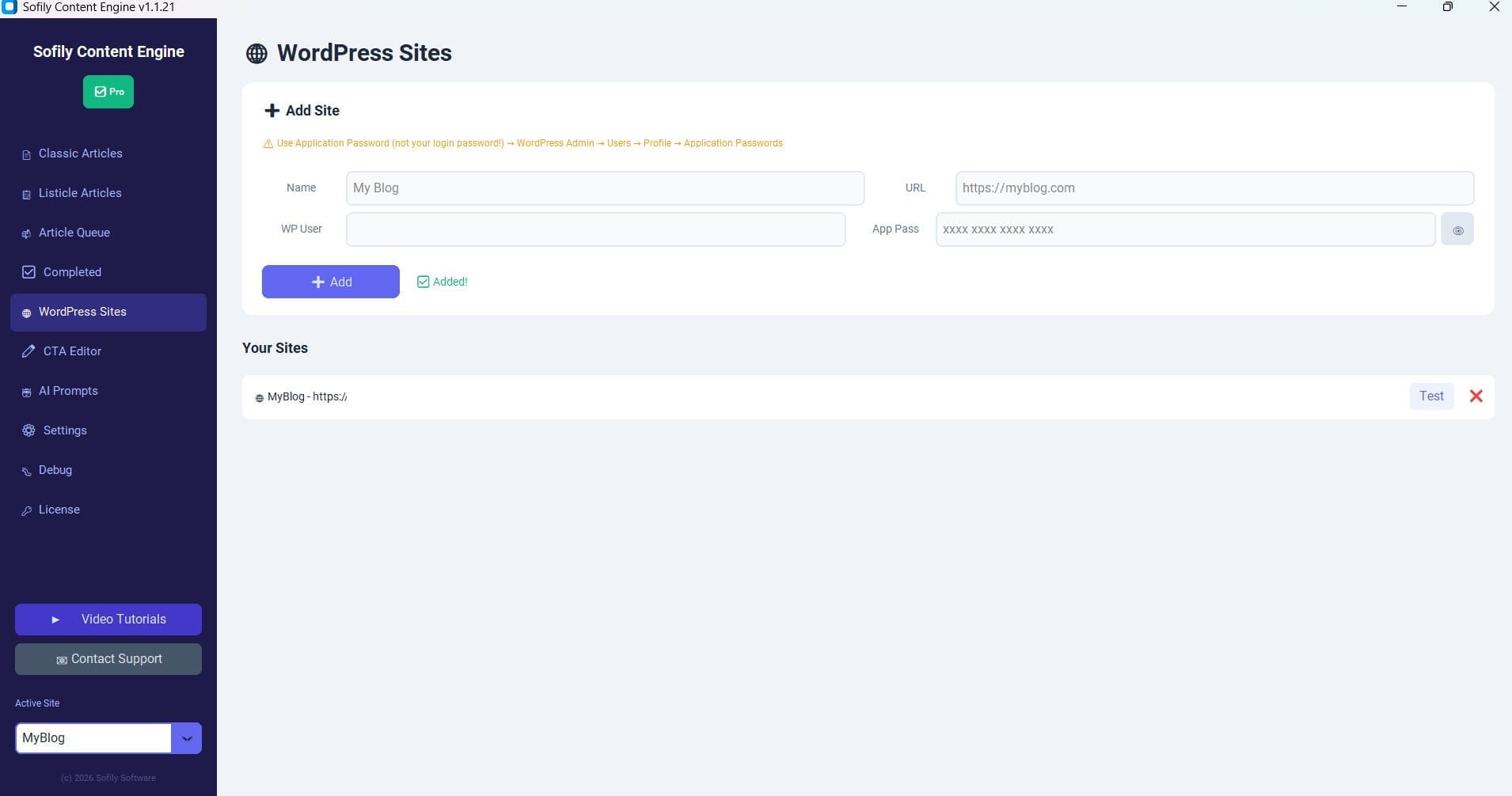
For WordPress site owners, SCE’s multi-site management interface shows exactly which sites are connected, with manual control over each draft’s review. It’s an efficient checkpoint against overexpansion. You stay creative while technology carries the manual transfer work. For non-blog setups — tutors, designers, product sellers — “scaling” could mean pre-booking clients or outsourcing editing, not doubling workload. Same logic, different tools.
And yes, expect dips during growth. Revenue may momentarily drop while systems catch up. That lull is normal; it’s what separates businesses that last from one-hit channels. The key is pacing — scaling gradually, capturing learning, and improving automation only after stability appears. Avoid comparing your growth curve with others. Yours may be slower but more durable.
Building a Support Network for Sustained Growth
Scaling requires resilience, and resilience thrives in community. Surround yourself with peers who understand the challenges of home-based business life. Co-working spaces, local entrepreneur meetups, or online accountability groups can help. Having others to share failures and celebrate wins reduces burnout risk. Many successful creators I’ve interviewed attribute longevity not to revenue but to relationships built along the way — the quiet encouragement that makes difficult periods manageable.
Next Step: Start Here
You now see that How to Make Money From Home in the UK: Complete Guide isn’t about luck or novelty. It’s method, discipline, realistic automation, and honest iteration. Pick one revenue path — freelancing, eCommerce, or blogging — and outline a 4‑week publishing or delivery system today. Resistance will show up, but systems tame it.

For bloggers planning multi‑site output, downloading the Sofily Content Engine on Windows gives a tangible structure: batch generate drafts, attach SEO data, then review manually before hitting publish. It keeps control where it matters — with you — while removing setup pain. Start small, systematize early. That’s how home income in the UK grows from pocket change into stability.
Whether your goal is to earn an extra £500 to offset energy bills or to build a full-time online brand, the principle remains: structure is freedom. Treat each process like an experiment. Document what works, automate repetition, protect creative focus. Over time, those disciplined habits merge into equity — your skill, content, and reputation producing returns long after the kettle’s boiled. That’s not a myth; it’s modern independence done sustainably.
Frequently Asked Questions
Some of the most reliable methods include freelance writing, virtual assistance, online consulting, running an eCommerce store, and creating digital content such as blogs or YouTube channels. These options require consistent work and skill-building, but they provide a sustainable path to long-term income from home.
Not necessarily. Many home-based income streams rely more on transferable skills like communication, organization, and technical know-how than formal qualifications. However, building expertise in a niche can help you charge higher rates and attract better clients.
Earnings vary widely depending on your chosen activity, experience, and time commitment. For instance, freelance writers or consultants can earn anywhere from a few hundred to several thousand pounds a month once established, while online sellers or creators might scale income gradually over time.
Many beginners expect instant results or spread themselves too thin by chasing every idea. It’s better to focus on one proven strategy, treat it like a real business, and reinvest early profits into tools or education that improve efficiency and results.
Yes, self-employed individuals must register with HMRC and keep accurate financial records for tax purposes. Depending on the business model, you may also need insurance, data protection compliance, or a business bank account to operate professionally.